
Penerangan Produk
20 ton truck hydraulic dump hoist cylinder
1. Company Information
Found 1995,w are 1 of the biggest hydraulic cylinder manufacturer in China, specialized in design, R & D and manufacturing of hydraulic machinery products etc, with its annual production capaciy of 2 square meters.There are 700 sets of mnufacturing equipment .
Penerangan Produk
2. hydraulic telescopic cylinder for dump truck drawing and parameter
Hyva FE type
| ITEM | MODLE NO. | # of Stages | Largest Moving Stage Diameter(mm) | stroke(mm) | mounting distance(mm) |
| 1 | WTHY FE-3-110-3205 | 3 | 110 | 3205 | 1449 |
| 2 | WTHY FE-3-110-3460 | 3 | 110 | 3460 | 1609 |
| 3 | WTHY FE-3-129-3460 | 3 | 129 | 3460 | 1449 |
| 4 | WTHY FE-3-129-3880 | 3 | 129 | 3880 | 1609 |
| 5 | WTHY FE-3-149-2900 | 3 | 149 | 2900 | 1320 |
| 6 | WTHY FE-3-149-3200 | 3 | 149 | 3200 | 1420 |
| 7 | WTHY FE-3-149-3500 | 3 | 149 | 3500 | 1520 |
| 8 | WTHY FE-3-149-3880 | 3 | 149 | 3880 | 1644 |
| 9 | WTHY FE-4-149-4280 | 4 | 149 | 4280 | 1450 |
| 10 | WTHY FE-4-149-4940 | 4 | 149 | 4940 | 1529 |
| 11 | WTHY FE-4-149-4620 | 4 | 149 | 4620 | 1484 |
| 12 | WTHY FE-4-169-4280 | 4 | 169 | 4280 | 1394 |
| 13 | WTHY FE-4-169-4450 | 4 | 169 | 4450 | 1437 |
| 14 | WTHY FE-4-169-4620 | 4 | 169 | 4620 | 1479 |
| 15 | WTHY FE-4-169-4940 | 4 | 169 | 4940 | 1529 |
| 16 | WTHY FE-4-169-5000 | 4 | 169 | 5000 | 1574 |
| 17 | WTHY FE-4-169-5180 | 4 | 169 | 5180 | 1604 |
| 18 | WTHY FE-5-169-5355 | 5 | 169 | 5355 | 1394 |
| 19 | WTHY FE-5-169-5780 | 5 | 169 | 5780 | 1559 |
| 20 | WTHY FE-5-169-6180 | 5 | 169 | 6180 | 1527 |
| 21 | WTHY FE-5-169-6480 | 5 | 169 | 6480 | 1604 |
| 22 | WTHY FE-5-169-6830 | 5 | 169 | 6830 | 1674 |
| 23 | WTHY FE-5-169-7130 | 5 | 169 | 7130 | 1769 |
| 24 | WTHY FE-5-191-6180 | 5 | 191 | 6180 | 1527 |
| 25 | WTHY FE-5-191-9030 | 5 | 191 | 9030 | 2177 |
| 26 | WTHY FE-6-191-7420 | 6 | 191 | 7420 | 1677 |
| 27 | WTHY FE-5-214-6830 | 5 | 214 | 6830 | 1662 |
| 28 | WTHY FE-5-214-7130 | 5 | 214 | 7130 | 1722 |
Parker and Custom hoists kind
| ITEM | MODEL NO. | Largest Moving Stage Diameter | # of Stages | STROKE | CLOSED LENGTH | OPEN LENGTH |
| 1 | WTPK 3TG F5*72 | 5″ | 3 | 72″(1829mm) | 37.19″ (945mm) | 109.19″ (2773mm) |
| 2 | WTPK 3TG F5*84 | 5” | 3 | 84″ (2134mm) | 41.19″ (1046mm) | 125.19″ (3180mm) |
| 3 | WTPK 3TG F5*107 | 5″ | 3 | 107.56″ (2732mm) | 48.38″ (1229mm) | 155.94″ (3961mm) |
| 4 | WTPK 3TG F5*126 | 5″ | 3 | 126.63″ (3216mm) | 54.56″ (1386mm) | 181.19″ (4602mm) |
| 5 | WTPK 3TG F6*86 | 6″ | 3 | 86.75″ (2203mm) | 40.88″ (1038mm) | 127.63″ (3241mm) |
| 6 | WTPK 3TG F6*104 | 6″ | 3 | 103.94″ (2640mm) | 47″ (1194mm) | 150.94″ (3834mm) |
| 7 | WTPK 3TG F6*107 | 6″ | 3 | 107.56″ (2732mm) | 48.38″ (1289mm) | 155.94″ (3961mm) |
| 8 | WTPK 3TG F6*111 | 6” | 3 | 111″ (2819mm) | 49.94″ (1268mm) | 160.94″ (4087mm) |
| 9 | WTPK 3TG F6*120 | 6” | 3 | 120” (3048mm) | 53.5″ (1359mm) | 173.5″ (4407mm) |
| 10 | WTPK 3TG F6*123 | 6” | 3 | 123″ (3124mm) | 54.94″ (1395mm) | 177.94″ (4519mm) |
| 11 | WTPK 3TG F6*126 | 6” | 3 | 126.31″(3208mm) | 54.56″ (1386mm) | 180.87″ (4594mm) |
| 12 | WTPK 3TG F6*140 | 6” | 3 | 140.25″ (3562mm) | 59.81″ (1519mm) | 200.06″ (5081mm) |
| 13 | WTPK 4TG F6*135 | 6” | 4 | 135″ (3429mm) | 47.19″ (1199mm) | 182.19″ (4628mm) |
| 14 | WTPK 4TG F6*156 | 6” | 4 | 156″ (3962mm) | 53.62″ (1362mm) | 209.62″ (5324mm) |
| 15 | WTPK 3TG F7*110 | 7″ | 3 | 110.63″ (2810mm) | 50.06″ (1271mm) | 160.69″ (4081mm) |
| 16 | WTPK 3TG F7*120 | 7″ | 3 | 120″ (3048mm) | 53.12″ (1349mm) | 173.12″ (4397mm) |
| 17 | WTPK 3TG F7*124 | 7″ | 3 | 124.88″ (3172mm) | 54.81″ (1392mm) | 179.69″ (4564mm) |
| 18 | WTPK 3TG F7*129 | 7″ | 3 | 129″ (3277mm) | 56.5″ (1435mm) | 185.5″ (4712mm) |
| 19 | WTPK 3TG F7*140 | 7″ | 3 | 140.44″ (3567mm) | 60″ (1524mm) | 200.44″ (5091mm) |
| 20 | WTPK 3TG F7*150 | 7″ | 3 | 150″ (3810mm) | 63.50″ (1613mm) | 213.50″ (5423mm) |
| 21 | WTPK 4TG F7*120 | 7″ | 4 | 120″ (3048mm) | 44.12″ (1120mm) | 164.12″ (4168mm) |
| 22 | WTPK 4TG F7*135 | 7″ | 4 | 135″ (3429mm) | 48.43″ (1230mm) | 183.44″ (4659mm) |
| 23 | WTPK 4TG F7*140 | 7″ | 4 | 140″ (3556mm) | 49.75″ (1263mm) | 189.75″ (4819mm) |
| 24 | WTPK 4TG F7*156 | 7″ | 4 | 156″ (3962mm) | 53.75″ (1365mm) | 209.75″ (5327mm) |
| 25 | WTPK 4TG F7*161 | 7″ | 4 | 161.75″ (4108mm) | 55.31″ (1405) | 217.06″ (5513mm) |
| 26 | WTPK 4TG F7*167 | 7″ | 4 | 167″ (4242mm) | 56.38″ (1432mm) | 223.38″ (5674mm) |
| 27 | WTPK 4TG F7*180 | 7″ | 4 | 180″ (4572mm) | 61.12″ (1552mm) | 241.12″ (6124mm) |
| 28 | WTPK 4TG F8*148 | 8″ | 4 | 147.75″ (3753mm) | 51.50″ (1308mm) | 199.25″ (5061mm) |
| 29 | WTPK 4TG F8*156 | 8″ | 4 | 156″ (3962mm) | 53.75″ (1365mm) | 209.75″ (5327mm) |
| 30 | WTPK 4TG F8*161 | 8″ | 4 | 160″ (4064mm) | 55.75″ (1416mm) | 215.75″ (5480mm) |
| 31 | WTPK 4TG F8*170 | 8″ | 4 | 170″ (4318mm) | 57.25″ (1454mm) | 227.25″ (5481mm) |
| 32 | WTPK 4TG F8*180 | 8″ | 4 | 180″ (4572mm) | 59.75″ (1518mm) | 239.75″ (6090mm) |
| 33 | WTPK 5TG F8*170 | 8″ | 5 | 170″ (4318mm) | 49.88″ (1267mm) | 219.88″ (5585mm) |
| 34 | WTPK 5TG F8*190 | 8″ | 5 | 189″ (4800mm) | 54.62″ (1387mm) | 243.62″ (6188mm) |
| 35 | WTPK 5TG F8*220 | 8″ | 5 | 220″ (5588mm) | 60″ (1524mm) | 280″ (7112mm) |
| 36 | WTPK 5TG F8*235 | 8″ | 5 | 234″ (5944mm) | 64.62″ (1641mm) | 298.62″ (7585mm) |
| 37 | WTPK 5TG F8*250 | 8″ | 5 | 249″ (6325mm) | 68.62″ (1743mm) | 317.62″ (8068mm) |
| 38 | WTPK 5TG F8*265 | 8″ | 5 | 265″ (6731mm) | 71″ (1803mm) | 336″ (8534mm) |
| 39 | WTPK 5TG F8*285 | 8″ | 5 | 285″ (7239mm) | 78.5″ (1994mm) | 363.5″ (9233mm) |
| 40 | WTPK 5TG F9*220 | 9″ | 5 | 218″ (5537mm) | 62.44″ (1586mm) | 280.44″ (7123mm) |
| 41 | WTPK 5TG F9*235 | 9″ | 5 | 233″ (5918mm) | 65.44″ (1662mm) | 298.44″ (7580mm) |
| 42 | WTPK 5TG F9*250 | 9″ | 5 | 248″ (6299mm) | 68.44″ (1738mm) | 316.44″ (8037mm) |
| 43 | WTPK 5TG F9*265 | 9″ | 5 | 265″ (6731mm) | 72.62″ (1844mm) | 337.62″ (8575mm) |
| 44 | WTPK 5TG F9*280 | 9″ | 5 | 280″ (7112mm) | 72.62″ (1997mm) | 358.62″ (9109mm) |
| 45 | WTPK 5TG F9*300 | 9″ | 5 | 300″ (7620mm) | 79″ (2007mm) | 379″ (9627mm) |
| 46 | WTPK 5TG F9*320 | 9″ | 5 | 320″ (8128mm) | 83″ (2108mm) | 403″ (9628mm) |
| 47 | WTPK 5TG F9*340 | 9″ | 5 | 340″ (8636mm) | 87″ (2210mm) | 427″ (10846mm) |
3. hydraulic telescopic cylinder for dump truck produce line
700 sets manufacturing equipment,such as cold drawing production line ,heat treatment production line ,surface treatment production line,testing equipment,various digital-control machining equipment,gantry style linear electroplating production line.
4. hydraulic telescopic cylinder for dump truck quality guarantee system
Program before Delivery
1). Trial Operation Test
2). Start-up Pressure Test
3). Pressure-Tight Test
4). Leak Test
5). Full Stroke Test
6). Buffer Test
7). Testing the Effect of Limit
8). Load Efficiency Test
9). Reliability Test
Every piece of hydraulic cylinder are tested and will send out only after they are pasted the each test.
Our company has abundant technical force and perfect testing means. By making wide technical and business cooperation with many related enterprises, universities, colleges and institutes both at home and abroad, and employing senior engineers and software engineers, we have greatly strengthened and improved our designing, processing, and testing abilities.
5. After-service
1).Pre-sale service: Keep communicating with the truck manufacturers , including selection of product model , design of hydraulic system, test of performance and analysis of the accident. Once the problems occur, we will solve them immediately together with truck manufacturers .
2).The sale service: Provide training and technical support for users.
3).After-sale service: Solve the problem firstly, then analyse responsibility ; Replace the system components immediately if any need.
4). 24 hours telephone service hotline.
6.Exhibition and partner
7. FAQ
Q1. What are the same aspects of your cylinder with CHINAMFG cylinder?
A: Same inside structure.
Same outside dimension and same mounting sizes. It can be interchangeable with Hyva’s
Q2. Compared with CHINAMFG cylinder, what are your cylinder advantages?
A: 1. Rod are chrome plated.
2. Tubes are quenched and tempered.
3. Tube inner hole goes through deephole boring machine processing. Surface roughness is 0.4Ra
and circular degree is 0.571.
4. Good quality yet lower price.
Q3: Are you a manufacture or a trade company?
A: Manufacture, we are the leader manufacturer of hydraulic industry in China with over 20 years’ experience and technology accumulation. With strong technical team we could solve any annoyance of you.
Q4: Do you have quality control system?
A: Yes, The quality management system introduced is: ISO/TS 16949:2009-certified by NQA and IATF cert.
Q5: How can i get a booklet and buy a cylinder from you?
A: Very easy! Just leave me a message or email or call me directly, let me know you are interesting in our products. I will talk with you for the details soon!
Q6: Can you tell me the price for the cylinder?
A: 1. Please advice the drawing with technical requirement.
2. Please advice the model No. after you check our booklet.
3. Please advice the tipping capacity, number of stages, closed length, mounting type and size.
4. Please also help advice the quantities, this is very important.
Q7: Do your products come with a warranty?
A: Yes, we have 14month from production time. In this time, if the quality problem we will free repair for you.
Q8: Hydraulic cylinder internal leakage?
A: 3 main reasons causing internal leakage: Overload, polishing bad controlled, cheap seal kits. As is known to all, vehicles in China are often overloaded, our products all designed to bear the overload power. Advanced equipment could assure the polish processing. And we use the imported/TOP brand seals to meet customers’ requirement.
Q9: What about the quality feedback of your products?
A: WE HAVE NEVER RECEIVED EVEN ONCE QUALITY COMPLAINT FOR MANY YEARS OF INTERNATIONAL BUSINESS.
Q10: Can you help me to install or recommend what kind of hydraulic cylinder or power pack should I use for specific machine?
A: Yes, we have 25 experienced engineers who are always ready to help you. If you do not know what kind of hydraulic cylinders should be used in your machine, please just contact us, our engineers will design the exact products match your need.
Q11: What is the delivery time?
A: 20 days for bulk production, which is depend on quality, production process and so on.
Q12: What is your main payment term?
A: T/T, L/C, D/A, D/P either is available.
Q13: What is your contact information?
A: Mob: –
| Certification: | ISO9001, ISO/Ts 16949 |
|---|---|
| Tekanan: | Medium Pressure |
| Work Temperature: | Normal Temperature |
| Acting Way: | Single Acting |
| Working Method: | Straight Trip |
| Structure: | Piston Type |
| Samples: | US$ 800/Piece 1 Piece(Min.Order) | |
|---|
| Customization: | Available |
|
|---|
Can hydraulic cylinders be integrated with modern telematics and remote monitoring?
Yes, hydraulic cylinders can indeed be integrated with modern telematics and remote monitoring systems. The integration of hydraulic cylinders with telematics and remote monitoring technology offers numerous benefits, including enhanced operational efficiency, improved maintenance practices, and increased overall productivity. Here’s a detailed explanation of how hydraulic cylinders can be integrated with modern telematics and remote monitoring:
1. Sensor Integration:
– Hydraulic cylinders can be equipped with various sensors to gather real-time data about their performance and operating conditions. Sensors such as pressure transducers, temperature sensors, position sensors, and load sensors can be integrated directly into the cylinder or its associated components. These sensors provide valuable information about parameters such as pressure, temperature, position, and load, enabling remote monitoring and analysis of the cylinder’s behavior.
2. Data Transmission:
– The data collected from the sensors in hydraulic cylinders can be transmitted wirelessly or through wired connections to a central monitoring system. Wireless communication technologies such as Bluetooth, Wi-Fi, or cellular networks can be employed to transmit data in real-time. Alternatively, wired connections such as Ethernet or CAN bus can be utilized for data transmission. The choice of communication method depends on the specific requirements of the application and the available infrastructure.
3. Remote Monitoring Systems:
– Remote monitoring systems receive and process the data transmitted from hydraulic cylinders. These systems can be cloud-based or hosted on local servers, depending on the implementation. Remote monitoring systems collect and analyze the data to provide insights into the cylinder’s performance, health, and usage patterns. Operators and maintenance personnel can access the monitoring system through web-based interfaces or dedicated software applications to view real-time data, receive alerts, and generate reports.
4. Condition Monitoring and Predictive Maintenance:
– Integration with telematics and remote monitoring enables condition monitoring and predictive maintenance of hydraulic cylinders. By analyzing the collected data, patterns and trends can be identified, allowing for the detection of potential issues or anomalies before they escalate into major problems. Predictive maintenance algorithms can be applied to the data to generate maintenance schedules, recommend component replacements, and optimize maintenance activities. This proactive approach helps prevent unexpected downtime, reduces maintenance costs, and maximizes the lifespan of hydraulic cylinders.
5. Performance Optimization:
– The data collected from hydraulic cylinders can also be utilized to optimize their performance. By analyzing parameters such as pressure, temperature, and load, operators can identify opportunities for improving operational efficiency. Insights gained from the remote monitoring system can guide adjustments in system settings, load management, or operational practices to optimize the performance of hydraulic cylinders and the overall hydraulic system. This optimization can result in energy savings, improved productivity, and reduced wear and tear.
6. Integration with Equipment Management Systems:
– Telematics and remote monitoring systems can be integrated with broader equipment management systems. This integration allows hydraulic cylinder data to be correlated with data from other components or related machinery, providing a comprehensive view of the overall system’s performance. This holistic approach enables operators to identify potential interdependencies, optimize system-wide performance, and make informed decisions regarding maintenance, repairs, or upgrades.
7. Enhanced Safety and Fault Diagnosis:
– Telematics and remote monitoring can contribute to enhanced safety and fault diagnosis in hydraulic systems. Real-time data from hydraulic cylinders can be used to detect abnormal conditions, such as excessive pressure or temperature, which may indicate potential safety risks. Fault diagnosis algorithms can analyze the data to identify specific issues or malfunctions, enabling prompt intervention and reducing the risk of catastrophic failures or accidents.
In summary, hydraulic cylinders can be effectively integrated with modern telematics and remote monitoring systems. This integration enables the collection of real-time data, remote monitoring of performance, condition monitoring, predictive maintenance, performance optimization, integration with equipment management systems, and enhanced safety. By harnessing the power of telematics and remote monitoring, hydraulic cylinder users can achieve improved efficiency, reduced downtime, optimized maintenance practices, and enhanced overall productivity in various applications and industries.
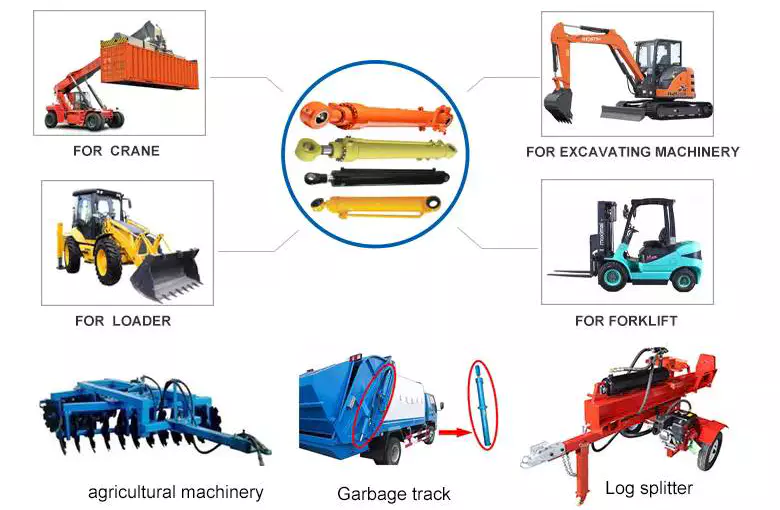
How do hydraulic cylinders contribute to the efficiency of agricultural tasks like plowing?
Hydraulic cylinders play a crucial role in improving the efficiency of agricultural tasks, including plowing. These cylinders provide several benefits that enhance the performance and productivity of agricultural machinery. Let’s explore how hydraulic cylinders contribute to the efficiency of plowing and other agricultural tasks:
- Powerful Force Generation: Hydraulic cylinders are capable of generating high forces, which is essential for tasks like plowing. The hydraulic system supplies pressurized fluid to the cylinders, converting hydraulic energy into mechanical force. This force is then utilized to drive plow blades through the soil, overcoming resistance and facilitating efficient soil penetration. The power generated by hydraulic cylinders ensures effective plowing, even in tough or compacted soil conditions.
- Adjustable Working Depth: Hydraulic cylinders allow for easy and precise adjustment of the plow’s working depth. By controlling the extension or retraction of the hydraulic cylinder, farmers can adjust the depth of the plow blades according to soil conditions, crop requirements, or their specific preferences. This adjustability enhances efficiency by ensuring optimal soil tillage and minimizing unnecessary energy expenditure. Farmers can adapt the plowing depth to different field areas, optimizing the use of resources and promoting uniform crop growth.
- Responsive Control: Hydraulic systems offer highly responsive control, enabling farmers to make quick adjustments during plowing operations. Hydraulic cylinders respond rapidly to changes in hydraulic pressure and valve settings, allowing for immediate modifications in the plow’s position, depth, or angle. This responsiveness enhances efficiency by facilitating on-the-go adjustments based on soil variations, obstacles, or changing field conditions. Farmers can maintain precise control over the plow’s performance, ensuring effective soil tillage and minimizing the risk of crop damage.
- Implement Versatility: Hydraulic cylinders enable the attachment of various implements to agricultural machinery, expanding their functionality and versatility. In the context of plowing, hydraulic cylinders allow for the attachment and detachment of plow blades or other tillage implements. This versatility enables farmers to adapt their equipment to different soil types, field sizes, or specific plowing requirements. By using hydraulic cylinders, farmers can easily switch between different implements, optimizing their equipment for specific tasks and maximizing efficiency.
- Efficient Time Management: Hydraulic cylinders contribute to time efficiency in agricultural tasks like plowing. With hydraulic systems, farmers can operate plows at higher speeds while maintaining control and precision. The responsive nature of hydraulic cylinders allows for efficient turning, maneuvering, and repositioning of plows, minimizing downtime and optimizing field coverage. This time efficiency translates into increased productivity and reduced overall operational costs. Farmers can accomplish plowing tasks more quickly, allowing them to cover larger field areas in less time.
In summary, hydraulic cylinders significantly contribute to the efficiency of agricultural tasks like plowing. Through powerful force generation, adjustable working depth, responsive control, implement versatility, and efficient time management, hydraulic systems equipped with cylinders enhance the performance and productivity of agricultural machinery. These contributions allow farmers to accomplish plowing tasks more effectively, optimize field operations, and achieve improved overall efficiency in their agricultural practices.
How do hydraulic cylinders accommodate variations in stroke length and force requirements?
Hydraulic cylinders are designed to accommodate variations in stroke length and force requirements, providing flexibility and adaptability for different applications. They can be tailored to meet specific needs by considering factors such as piston diameter, rod diameter, hydraulic pressure, and cylinder design. Here’s a detailed explanation of how hydraulic cylinders accommodate variations in stroke length and force requirements:
1. Cylinder Size and Design:
– Hydraulic cylinders come in various sizes and designs to accommodate different stroke lengths and force requirements. The cylinder’s diameter, piston area, and rod diameter are key factors that determine the force output. Larger cylinder diameters and piston areas can generate greater force, while smaller diameters are suitable for applications requiring lower force. By selecting the appropriate cylinder size and design, stroke lengths and force requirements can be effectively accommodated.
2. Piston and Rod Configurations:
– Hydraulic cylinders can be designed with different piston and rod configurations to accommodate variations in stroke length. Single-acting cylinders have a single piston and can provide a stroke in one direction. Double-acting cylinders have a piston on both sides, allowing for strokes in both directions. Telescopic cylinders consist of multiple stages that can extend and retract, providing a longer stroke length compared to standard cylinders. By selecting the appropriate piston and rod configuration, the desired stroke length can be achieved.
3. Hydraulic Pressure and Flow:
– The hydraulic pressure and flow rate supplied to the cylinder play a crucial role in accommodating variations in force requirements. Increasing the hydraulic pressure increases the force output of the cylinder, enabling it to handle higher force requirements. By adjusting the pressure and flow rate through hydraulic valves and pumps, the force output can be controlled and matched to the specific requirements of the application.
4. Customization and Tailoring:
– Hydraulic cylinders can be customized and tailored to meet specific stroke length and force requirements. Manufacturers offer a wide range of cylinder sizes, stroke lengths, and force capacities to choose from. Additionally, custom-designed cylinders can be manufactured to suit unique applications with specific stroke length and force demands. By working closely with hydraulic cylinder manufacturers, it is possible to obtain cylinders that precisely match the required stroke length and force requirements.
5. Multiple Cylinders and Synchronization:
– In applications that require high force or longer stroke lengths, multiple hydraulic cylinders can be used in combination. By synchronizing the movement of multiple cylinders through the hydraulic system, the stroke length and force output can be effectively increased. Synchronization can be achieved using mechanical linkages, electronic controls, or hydraulic circuitry, ensuring coordinated movement and force distribution across the cylinders.
6. Load-Sensing and Pressure Control:
– Hydraulic systems can incorporate load-sensing and pressure control mechanisms to accommodate variations in force requirements. Load-sensing systems monitor the load demand and adjust the hydraulic pressure accordingly, ensuring that the cylinder delivers the required force without exerting excessive force. Pressure control valves regulate the pressure within the hydraulic system, allowing for precise control and adjustment of the force output based on the application’s needs.
7. Safety Considerations:
– When accommodating variations in stroke length and force requirements, it is essential to consider safety factors. Hydraulic cylinders should be selected and designed with an appropriate safety margin to handle unexpected loads or variations in operating conditions. Safety mechanisms such as overload protection valves and pressure relief valves can be incorporated to prevent damage or failure in situations where the force limits are exceeded.
By considering factors such as cylinder size and design, piston and rod configurations, hydraulic pressure and flow, customization options, synchronization, load-sensing, pressure control, and safety considerations, hydraulic cylinders can effectively accommodate variations in stroke length and force requirements. This flexibility allows hydraulic cylinders to be tailored to meet the specific demands of a wide range of applications, ensuring optimal performance and efficiency.


editor by CX 2023-11-03