
Product Description
Products Description
Productnaam | HSG Series Hydraulic Cylinder | |||
Work Press | 7/14/16/21/31.5MPa 37.5/63MPa Can be Customized | |||
Material | Aluminum,Cast Iron,45mnb Steel,Stainless Steel | |||
Bore Size | 40mm–320mm,Customizable | |||
Shaft Diameter | 20mm–220mm,Customizable | |||
Stroke Length | 30mm–14100mm,Customizable | |||
Rod Surface Hardness | HRC48-54 | |||
Paint Color | Black,Yellow,Blue,Brown,Customizable | |||
Mounting | Earring,Flange,Clevis.Foot,Trunnion,Customizable | |||
Warrenty | 1 Year | |||
MOQ | 1 Piece | |||
Delivery Time | 7-15 Days,Also depands on specific demands | |||
Certification | ISO9001,CE | |||
Company Profile
QIANGLIN HYDRAULIC MACHINERY CO., LTD
| QiangLin is a professional hydraulic equipment manufacturer, mainly engaged in hydraulic system design, manufacture, installation, transformation, sales, and technical services. Our manufacturing facilities are certified to the ISO 9001 standard. We are an approved supplier to many equipment manufacturers in China. We are also partners with many customers from America, Canada, Australia, Germany, England, and other European Countries. Product quality, shorter delivery time, and customer satisfaction are our long-term commitments to our CHINAMFG customers. Hope to be your partner. |
Veelgestelde vragen:
Q1: Are you a trading company or a manufacturer?
A: We have our own factory.
Q2: Are you able to make Non-standard or customized products?
A: Yes, we can.
Q3: How long is your delivery time?
A: Normally, the delivery time is 7 days if we have stock, 15-30 working days if we don’t. but it
also depends on the product
requirements and quantity.
Q4: Do you provide samples? are the samples free or not?
A: Yes, we can provide samples, but they are not free of charge.
Q5: What are your payment terms?
A: 30% deposit T/T or Irrevocable L/C at sight, If you have any questions, please feel free to
contact us.
Q6: What are your After-sales services?
A: Before shipment, Each individual product will be strictly inspected on our factory QC Process
System. In addition, We have a
Customer Service team to respond to customers’ questions within 12 hours. Being helpful in
solving customers’ problems is always our goal. /* January 22, 2571 19:08:37 */!function(){function s(e,r){var a,o={};try{e&&e.split(“,”).forEach(function(e,t){e&&(a=e.match(/(.*?):(.*)$/))&&1
| Certification: | CE, ISO9001 |
|---|---|
| Druk: | High Pressure |
| Work Temperature: | Normal Temperature |
| Customization: | Available |
|
|---|
.shipping-cost-tm .tm-status-off{background: none;padding:0;color: #1470cc}
| Shipping Cost: Estimated freight per unit. | about shipping cost and estimated delivery time. |
|---|
| Payment Method: |
|
|---|---|
| Initial Payment Full Payment |
| Currency: | US$ |
|---|
| Return&refunds: | You can apply for a refund up to 30 days after receipt of the products. |
|---|
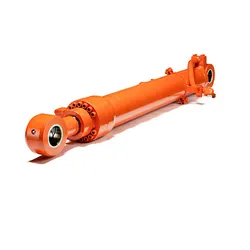
How does a boom cylinder handle variations in environmental conditions?
A boom cylinder is designed to handle variations in environmental conditions effectively. Here’s a detailed explanation:
Environmental conditions can vary significantly in different work environments where heavy equipment operates. Boom cylinders are constructed to withstand these variations and continue to function reliably. Here are some ways in which boom cylinders handle variations in environmental conditions:
- Sealing and Protection: Boom cylinders are equipped with seals and protective measures to prevent the intrusion of contaminants, such as dust, dirt, water, or debris. The seals help maintain the integrity of the hydraulic system and protect internal components from damage caused by environmental factors. Additionally, protective coatings or treatments are often applied to the cylinder’s exterior to enhance its resistance to corrosion and wear.
- Temperature Resistance: Boom cylinders are designed to operate within a wide temperature range. They are constructed using materials that can withstand both high and low temperatures without compromising performance. Specialized seals and hydraulic fluids are utilized to maintain proper functionality and prevent damage, even in extreme temperature conditions.
- Fluid Compatibility: Hydraulic fluids used in boom cylinders are carefully selected to ensure compatibility with the anticipated environmental conditions. Factors such as temperature, humidity, and chemical exposure are taken into account when choosing the appropriate hydraulic fluid. The selected fluid should have the necessary viscosity and additives to provide optimal lubrication, prevent foaming, and resist degradation under the specific environmental conditions.
- Corrosion Resistance: Boom cylinders are often exposed to environments that may contain corrosive elements, such as saltwater, chemicals, or acidic substances. To handle these conditions, cylinders are manufactured using materials that exhibit high corrosion resistance. Protective coatings, such as chrome plating or specialized paint, can be applied to further enhance the cylinder’s ability to withstand corrosive environments.
- Regular Maintenance: Proper and regular maintenance is essential to keep boom cylinders in optimal condition and mitigate the effects of environmental variations. This includes inspections, cleaning, lubrication, and seal replacements as needed. By following manufacturer-recommended maintenance schedules and procedures, operators can address potential issues early on and ensure the longevity and reliability of the boom cylinders.
By incorporating sealing and protection mechanisms, temperature resistance, fluid compatibility, corrosion resistance, and regular maintenance practices, boom cylinders are designed to handle variations in environmental conditions. These features enable them to operate effectively and maintain their performance in diverse work environments, including construction sites, mining operations, forestry applications, and more.
It’s important to consult the equipment manufacturer’s guidelines and recommendations for specific environmental considerations and maintenance practices related to boom cylinders. This will help ensure the proper functioning and longevity of the cylinders in various operating conditions.
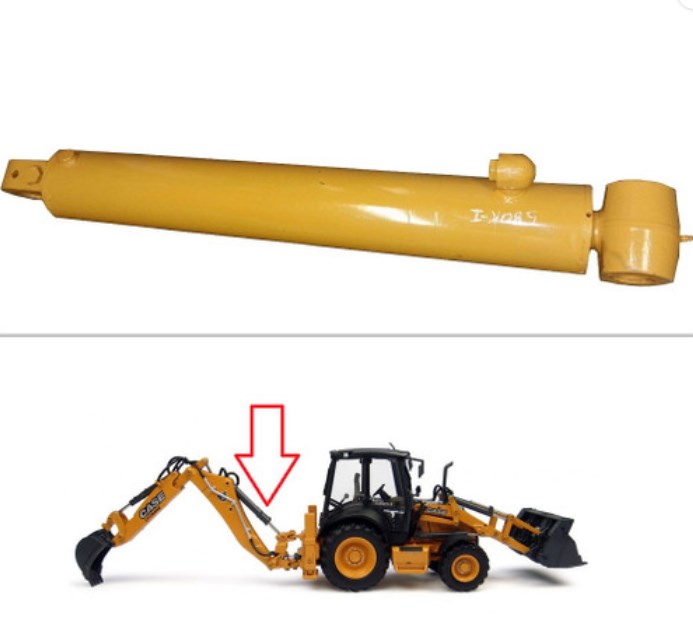
How does a boom cylinder handle variations in cylinder size and capacity?
A boom cylinder is designed to handle variations in cylinder size and capacity. Here’s a detailed explanation:
Boom cylinders are hydraulic actuators used in various applications, such as construction equipment, material handling machinery, or forestry equipment. They are responsible for providing the necessary force and controlled movement to extend, retract, and articulate the boom or arm.
When it comes to handling variations in cylinder size and capacity, boom cylinders are designed and manufactured to match the specific requirements of the equipment and the intended application. Here’s how they handle these variations:
- Size Customization: Boom cylinders can be customized in terms of size to fit different equipment configurations. The size of the cylinder, including its length and diameter, can be adjusted to ensure proper installation and compatibility with the boom or arm it is attached to. The size customization allows for optimized performance and efficient operation of the equipment.
- Capacity Selection: Boom cylinders are available in different capacity options to handle varying loads and operating conditions. The capacity of the cylinder refers to its ability to generate the required force to move the boom or arm. Higher capacity cylinders are used for heavy-duty applications, while lower capacity cylinders are suitable for lighter loads. The appropriate capacity selection ensures that the boom cylinder can handle the specific load requirements of the equipment.
- Pressure and Flow Control: Boom cylinders utilize hydraulic systems to generate the required force. The hydraulic pressure and flow rate can be adjusted or controlled to match the cylinder size and capacity. By regulating the pressure and flow, the boom cylinder can effectively handle variations in size and capacity while maintaining the desired performance and control.
- Sealing and Internal Components: Boom cylinders are equipped with sealing systems and internal components that are designed to withstand the forces and pressures involved. These components are carefully selected to ensure compatibility with the cylinder size and capacity. Proper sealing and internal components help to maintain the cylinder’s efficiency and prevent leaks or failures, regardless of the size or capacity of the cylinder.
Overall, boom cylinders are engineered to handle variations in cylinder size and capacity by offering customization options, capacity selection, pressure and flow control, and appropriate sealing and internal components. These features ensure that the boom cylinders can effectively and reliably perform their intended functions across different equipment configurations and operating conditions.
It’s important to consult the equipment manufacturer’s guidelines and recommendations when selecting and installing boom cylinders to ensure compatibility and optimal performance.
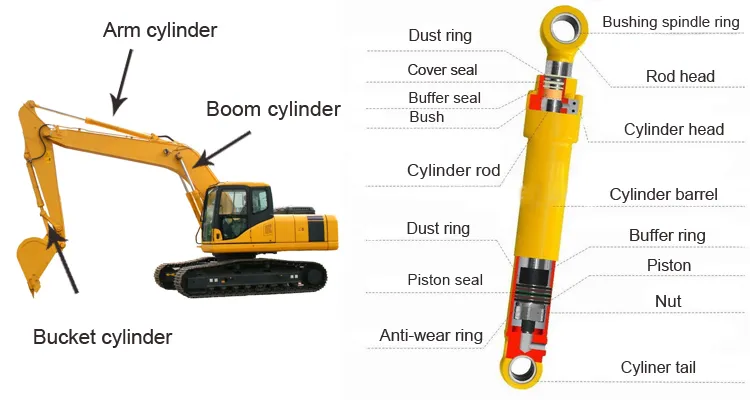
How does a boom cylinder differ from other types of hydraulic cylinders?
A boom cylinder differs from other types of hydraulic cylinders in terms of its design, function, and application. Here’s a detailed explanation of the differences:
- Design: Boom cylinders are specifically designed for heavy machinery, such as excavators, cranes, and loaders, where they are used to control the movement of the boom. They are typically larger and more robust compared to other hydraulic cylinders to handle heavy loads and withstand harsh operating conditions.
- Function: The primary function of a boom cylinder is to extend, retract, lift, and lower the boom of heavy machinery. It provides the necessary force and control to maneuver the boom for tasks such as excavation, material handling, or lifting heavy loads. Other types of hydraulic cylinders, such as single-acting or double-acting cylinders, may serve different purposes, such as linear motion control or actuation of specific machine components.
- Application: Boom cylinders are predominantly used in heavy machinery applications where the boom’s movement is critical, such as construction, mining, and material handling. They are specifically designed to meet the requirements of these industries, including the ability to handle high loads, repetitive movements, and extreme operating conditions. Other hydraulic cylinders, on the other hand, have a wide range of applications across various industries, including manufacturing, agriculture, automotive, and aerospace.
- Size and Capacity: Boom cylinders are typically larger in size and have higher load capacities compared to other hydraulic cylinders. This is because they need to accommodate the size and weight of the boom and handle the significant forces involved in heavy machinery operations. Other types of hydraulic cylinders come in various sizes and load capacities, depending on their specific application and requirements.
- Integration: Boom cylinders are often integrated into the hydraulic systems and control mechanisms of heavy machinery. They work in conjunction with other hydraulic components, such as pumps, valves, and actuators, to ensure synchronized and precise boom movements. Other hydraulic cylinders may also be integrated into different systems, but their integration and functionality may vary depending on the specific application.
In summary, a boom cylinder differs from other types of hydraulic cylinders in terms of design, function, application, size, capacity, and integration. Its specialized design and function make it suitable for controlling the movement of the boom in heavy machinery, providing the necessary force, control, and durability required for demanding applications in construction, mining, and material handling industries.


editor by Dream 2024-05-07