Product Description
Product Description
prodcut details
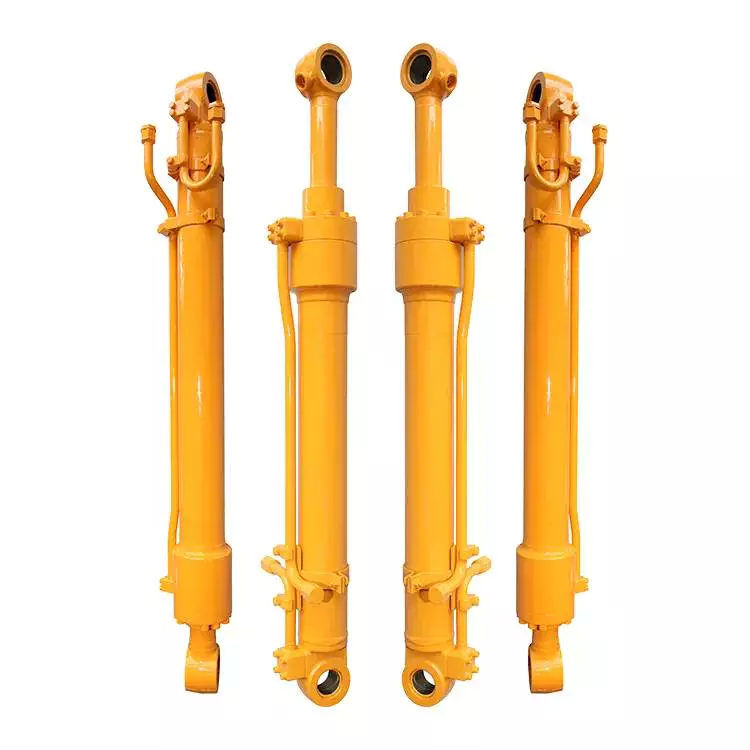
The North American advanced processing technology is adopted to ensure the stable performance.
High quality alloy seamless steelpipe are adopted to keep big lifting capacity and light weight
The application of imperial size makes it easy to replace the seals and other accessories
Telescopic cylinders are made from E355 steel grade, however, you can request as per your specification (such as 27SiMn, 16Mn,etc.).
Superior chrome-plating technology improves the corrosion resistance and hardness of cylinders
The world famous brands of seals such as HALLITE, CHINAMFG and NOK ensure the sealing performance
World-class processing technology ensures stable and reliable quality
12 months quality gurantee with full after-sale service policy
Custom Design: As per your drawing and specifications – such pressure, seal kit, and steel grade material
All our products are tested with hydraulic oil, applying test pressure before shipment. We to promise to provide flawless and quality products to our customers.
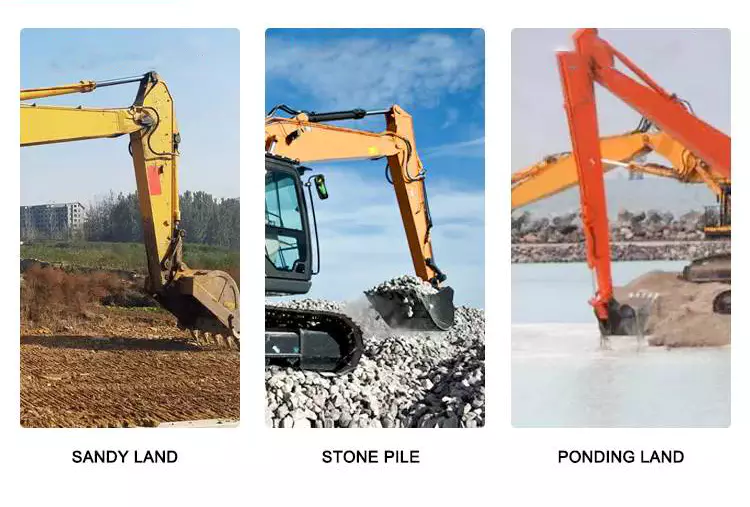
Main application areas of hydraulic
Construction machinery / Hydraulic automatic shifting gearbox/
Vehicle temperature control / mining machine / Working at height /
Agricultural machinery / Port Machinery / Material handling / Municipal vehicle
| NO | ITEM | DATA OF dump truck hydraulic cylinder | ||||||||||||||||
| 1 | Material | Carbon Steel, Alloy Steel, 27SiMn,45#,20#,etc | ||||||||||||||||
| 2 | Honed tube | 40-3 square CHINAMFG with 150 employees . And we have one-stop solution from design to package and OEM&ODM service with 30 year experience. There are 15 precision production lines with a monthly output value of up to 200,000 units. Excellent quality products are guaranteed by advanced processing equipment. The company has imported CNC deep hole boring machines, CNC laser cutting machines, CNC machining centers, CNC cleaning machines, automatic assembly lines for hydraulic cylinders, robot welding stations, automatic welding machines and other precision processing equipment, over 600 sets.The company has successively won the title of “Influential Brand of Hydraulic Parts and Accessories in China’s Construction Machinery Parts Industry” and its high-pressure cylinder products have won many honorary titles including 36 patents. Each process has undergone precise parts testing and finished product testing. It has a quality shelf life of up to 12 mnths and provides a perfect after-sales service policy.After years of development, Tingshi Hydraulic has developed into an enterprise with complete hardware facilities, sophisticated processing equipment, strong technical force, and good social benefits. For the stable development of your main business, we look CHINAMFG to cooperating with you.
HIGH QUALITITY GUARANTEE- Telescopic hydraulic cylinder for dump truck <Hydraulic Cylinder Leak Test <Telescopic Hydraulic jack Buffer Test <Hydraulic Telescopic Cylinder Reliability Test <Dump truck Hydraulic Cylinder Full Stroke Test <Dump trailer Hydraulic Cylinder Trial Operation Test <Tipper truck Cylinder Pressure Tight Test <Dump truck telescopic Hydraulic Cylinder Load Efficiency Test
Certifications
Packaging & Shipping
FAQ
1. who are we? 2. how can we guarantee quality? 3.what can you buy from us? 4. what services can we provide? 5. why should you buy from us not from other suppliers? /* January 22, 2571 19:08:37 */!function(){function s(e,r){var a,o={};try{e&&e.split(“,”).forEach(function(e,t){e&&(a=e.match(/(.*?):(.*)$/))&&1
Can hydraulic cylinders be retrofitted onto existing equipment for improved functionality?Yes, hydraulic cylinders can be retrofitted onto existing equipment to enhance functionality and performance. Retrofitting hydraulic cylinders onto existing machinery or equipment offers several benefits, including increased power, improved control, enhanced precision, and versatility. Here’s a detailed explanation of how hydraulic cylinders can be retrofitted onto existing equipment for improved functionality: 1. Increased Power: – Retrofitting hydraulic cylinders allows for the addition of hydraulic power to the existing equipment. By integrating hydraulic cylinders, the equipment can generate higher forces and handle heavier loads. This increased power enables the equipment to perform tasks that were previously challenging or impossible. For example, a retrofit hydraulic cylinder on a crane can enhance its lifting capacity and enable it to handle heavier loads more efficiently. 2. Improved Control: – Hydraulic cylinders provide precise control over the motion and positioning of equipment. By retrofitting hydraulic cylinders, operators gain better control over the speed, force, and direction of movement. The addition of hydraulic control valves and a hydraulic power unit allows for fine-tuning of the equipment’s operation. Improved control facilitates safer and more efficient operation, reducing the risk of damage and improving overall productivity. 3. Enhanced Precision: – Retrofitting hydraulic cylinders onto existing equipment can significantly improve precision and accuracy. Hydraulic systems offer precise control over movement, enabling smooth and controlled motion. This enhanced precision is beneficial in applications where precise positioning or repetitive movements are required. For instance, retrofitting hydraulic cylinders onto a robotic arm can enhance its accuracy and repeatability, making it more suitable for tasks that demand high precision. 4. Versatility and Adaptability: – Retrofitting hydraulic cylinders can increase the versatility and adaptability of existing equipment. Hydraulic systems can be easily integrated with various types of machinery, allowing for the utilization of hydraulic power across different applications. The modular nature of hydraulic components facilitates the retrofitting process, enabling the equipment to perform a broader range of tasks. This versatility is particularly advantageous in industries where equipment needs to adapt to changing operational requirements. 5. Retrofit Kits and Customization: – Manufacturers often provide retrofit kits that include all the necessary components for integrating hydraulic cylinders onto existing equipment. These kits typically consist of hydraulic cylinders, mounting brackets, hoses, fittings, control valves, and other required accessories. Retrofit kits simplify the retrofitting process and ensure compatibility between the hydraulic components and the existing equipment. Additionally, manufacturers can offer customization options to tailor the retrofit solution to specific equipment and application needs. 6. Cost-Effective Solution: – Retrofitting hydraulic cylinders onto existing equipment can be a cost-effective solution compared to purchasing new machinery. By leveraging the existing equipment’s structural framework and mechanical components, the overall cost of upgrading can be reduced. Retrofitting also minimizes downtime since the equipment does not need to be completely replaced. Furthermore, the improved functionality and performance resulting from the retrofit can lead to increased productivity and cost savings in the long run. 7. Professional Installation and Expertise: – Retrofitting hydraulic cylinders onto existing equipment often requires professional installation and expertise. Working with experienced hydraulic system integrators or manufacturers ensures proper installation, compatibility, and optimal performance of the retrofit solution. These professionals can assess the existing equipment, recommend suitable hydraulic components, and carry out the retrofitting process efficiently. Their knowledge and expertise contribute to the successful integration of hydraulic cylinders and the overall improvement of equipment functionality. In summary, hydraulic cylinders can indeed be retrofitted onto existing equipment to improve functionality. This retrofitting process offers advantages such as increased power, improved control, enhanced precision, versatility, cost-effectiveness, and access to retrofit kits and customization options. By retrofitting hydraulic cylinders, existing equipment can be upgraded to meet evolving operational needs, extend its lifespan, and enhance overall performance.
Contribution of Hydraulic Cylinders to the Precision of Robotic and Automation SystemsHydraulic cylinders play a significant role in enhancing the precision of robotic and automation systems. These systems rely on precise and controlled movements to perform various tasks with accuracy and repeatability. Let’s explore how hydraulic cylinders contribute to the precision of robotic and automation systems:
In summary, hydraulic cylinders make significant contributions to the precision of robotic and automation systems by enabling precise positioning, controlled motion, force control, load handling, and offering durability and reliability. These capabilities ensure accurate and repeatable movements, minimize errors, and enhance the overall precision of the system. By incorporating hydraulic cylinders into robotic and automation systems, manufacturers can achieve higher levels of precision, efficiency, and productivity in various industrial applications.
How do hydraulic cylinders handle variations in load and pressure during operation?Hydraulic cylinders are designed to handle variations in load and pressure during operation, making them versatile and efficient in various applications. Hydraulic systems use the principle of transmitting force through incompressible fluid to generate linear motion. Here’s a detailed explanation of how hydraulic cylinders handle variations in load and pressure: 1. Load Handling: – Hydraulic cylinders are capable of handling different loads by utilizing the principle of Pascal’s law. According to Pascal’s law, when pressure is applied to a fluid in a confined space, the pressure is transmitted equally in all directions. In a hydraulic cylinder, the force applied to the piston results in an equal force output at the rod end of the cylinder. The size of the piston and the pressure exerted determine the force generated by the cylinder. Therefore, hydraulic cylinders can handle a wide range of loads by adjusting the pressure applied to the fluid. 2. Pressure Compensation: – Hydraulic systems incorporate pressure compensation mechanisms to handle variations in pressure during operation. Pressure compensating valves or regulators are often used to maintain a consistent pressure in the hydraulic system, regardless of load changes. These valves automatically adjust the flow rate or pressure to ensure stable and controlled operation of the hydraulic cylinder. By compensating for pressure variations, hydraulic cylinders can maintain a consistent force output and prevent damage or instability due to excessive pressure. 3. Control Valves: – Control valves play a crucial role in managing variations in pressure and load during hydraulic cylinder operation. Directional control valves, such as spool valves or poppet valves, control the flow of hydraulic fluid into and out of the cylinder, enabling precise control of the cylinder’s extension and retraction. By adjusting the position of the control valve, the speed and force exerted by the hydraulic cylinder can be regulated to match the load and pressure requirements of the application. Control valves allow for efficient handling of variations in load and pressure by providing fine-tuned control over the hydraulic system. 4. Accumulators: – Hydraulic accumulators are often used to handle fluctuations in pressure and load. Accumulators store hydraulic fluid under pressure, which can be released or absorbed as needed to compensate for sudden changes in load or pressure. When the load on the hydraulic cylinder decreases, the accumulator releases stored fluid to maintain pressure and prevent pressure spikes. Conversely, when the load on the cylinder increases, the accumulator absorbs excess fluid to maintain system stability. By utilizing accumulators, hydraulic cylinders can effectively handle variations in load and pressure, ensuring smooth and controlled operation. 5. Feedback and Control Systems: – Advanced hydraulic systems may incorporate feedback and control systems to monitor and adjust the operation of hydraulic cylinders in real-time. Position sensors or pressure sensors provide feedback on the cylinder’s position, force, and pressure, allowing the control system to make continuous adjustments to optimize performance. These systems can automatically adapt to variations in load and pressure, ensuring precise control and efficient operation of the hydraulic cylinder. 6. Design Considerations: – Proper design considerations, such as selecting the appropriate cylinder size, piston diameter, and rod diameter, are essential for handling variations in load and pressure. The design should account for the maximum anticipated load and pressure conditions to ensure the hydraulic cylinder operates within its specified range. Additionally, the selection of suitable seals, materials, and components that can withstand the anticipated load and pressure variations is crucial for maintaining the reliability and longevity of the hydraulic cylinder. By utilizing the principles of hydraulic systems, incorporating pressure compensation mechanisms, employing control valves and accumulators, and implementing feedback and control systems, hydraulic cylinders can effectively handle variations in load and pressure during operation. These features and design considerations allow hydraulic cylinders to adapt and perform optimally in a wide range of applications and operating conditions.
|